ServicesHail Damage Repair
Hail Damage Repair in Hawaiian Gardens
Hail can bruise shingles and crack tile without leaving a single drip inside. We get on the roof, mark every hit, photograph it and tell you plainly what needs fixing. Your plants and walkways stay covered while we work, and you hear from us before each step.
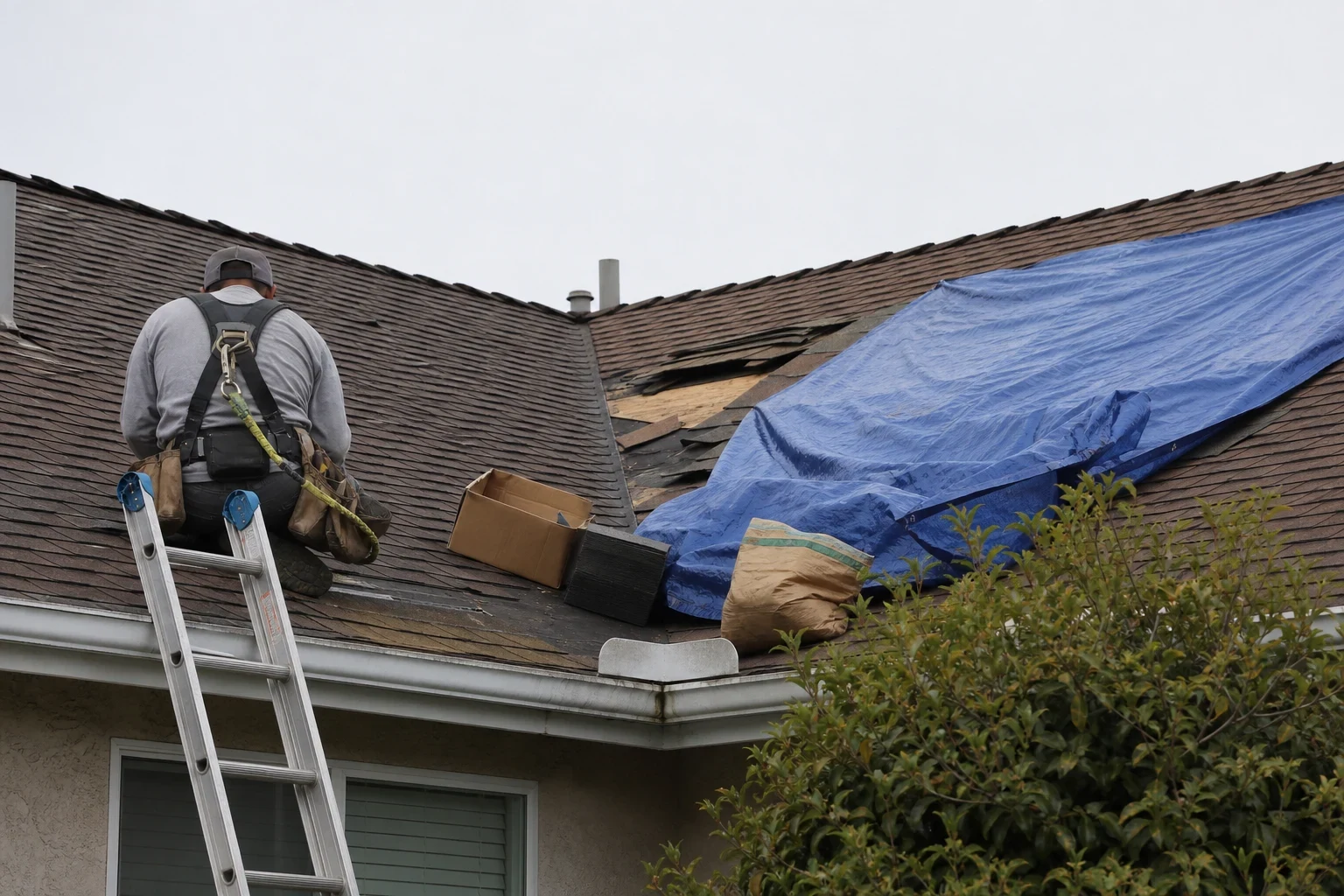
What Hail Does to a Roof
Hail isn't common here, but when a winter storm drops it, the damage tends to hide. On asphalt shingles, a hailstone knocks off granules and can crack the mat underneath. The shingle still looks flat from the ground. Months later the bare spot dries out in the sun and starts to split.
Tile shows it differently. Clay and concrete tiles chip at the edges or crack clean through, and water then runs onto the underlayment below. Soft metal takes dents too, so vents, flashing and gutters are often the first clue.
Hail damage repair means finding all of that, fixing what was actually hit and leaving the rest alone. If the hits are spread across the whole roof, we'll tell you so and talk about roof replacement. If it's a few spots, we fix the few spots. We work in English and Spanish.
What Our Hail Repair Covers
- Every slope, marked in chalk
- We go over all of the roof, including the faces that pointed away from the storm. Each hit gets a chalk circle so the pattern shows up clearly in your photos.
- Shingle replacement
- Bruised or cracked shingles come out and new ones go in, nailed and sealed to the ones around them. We look for the closest match in color and profile.
- Cracked tile swaps
- Broken clay or concrete tiles are lifted out and replaced one by one. We check the underlayment under each one before the new tile goes down.
- Vents, flashing and gutters
- Dented roof vents and crushed flashing get replaced so they seal again. Gutters and downspouts that took hits are repaired or swapped out as part of the same visit.
- Flat roof punctures
- On low-slope sections, hail can puncture or split the membrane. We patch or replace those areas so water can't sit and seep in.
Signs Hail Hit Your Roof
Dents in metal
Look at your gutters, downspouts and the vent caps on the roof. Round dents mean the shingles or tile took the same hits.
Granules in the gutters
A pile of dark sand at the downspout after a storm is shingle coating that got knocked loose.
Cracked or chipped tile
Broken tile corners in the yard or cracks you can see from the street are worth a closer look.
Dark spots on shingles
Small, round patches that look shinier or darker than the rest are where granules came off.
A new stain inside
A ceiling spot that shows up weeks after a storm can trace back to a hail crack that finally opened up.
How a Hail Repair Job Goes
- 1
Free inspection
We come out, walk the roof and mark every hit. Before anyone climbs, we let you know so kids and pets stay clear of the ladder side.
- 2
Photos and a written estimate
You get photos of what we found and a free written estimate that lists each repair line by line. No vague totals.
- 3
Your insurance claim
We work directly with your insurance claim. We meet the adjuster on the roof if you want us there and show them the same marked hits we showed you. The adjuster still makes the coverage call.
- 4
Repair day
Tarps go over plants and beds, and walkways get covered before any old material comes off. We tell you when we start, what we're on and when we're done for the day.
- 5
Cleanup and walk-through
Old shingles, tile pieces and wrappers get picked up by hand. A rolling magnet goes across the lawn, the beds and the driveway to catch stray nails. Before we leave, we show you each spot we replaced.
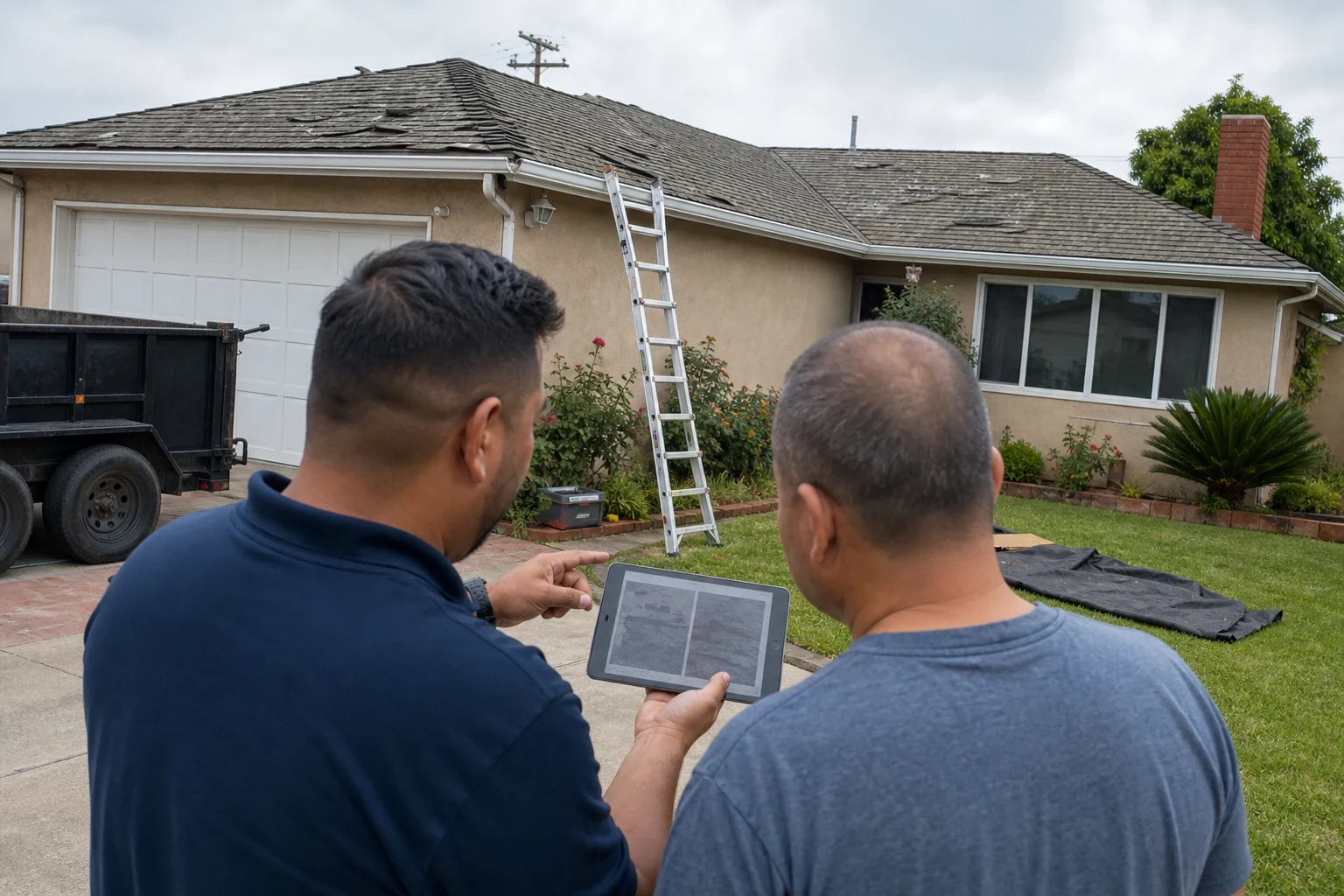
What Moves the Cost of Hail Repair
Hail rarely lands on two roofs the same way, even on one block. What you pay depends on how many spots were damaged and the material on your roof. We price the items below one by one, so nothing gets buried inside a single lump number.
- How many hits, on how many slopes
- A handful of bruised shingles on one side is a small job. Hits scattered across every slope add up fast and may point toward a new roof instead.
- Your roofing material
- Shingles swap out quickly. Tile takes more care to lift without breaking the pieces around it, and some older tile profiles are hard to find.
- What's under the damage
- If water got past a crack, the underlayment or decking may need work too. We only know once the damaged piece is off, and we show you before we add anything.
- Metal and gutter work
- Replacing dented vents, flashing or gutter runs adds parts and time, but it's often needed for the roof to seal again.
Hail Damage Questions
Something not covered here? (562) 545-3161
My roof isn't leaking. Do I still need to fix hail damage?
Often, yes. A bruised shingle loses its protective granules, and the sun breaks down the bare spot over time. It may hold for a season or two, then crack. Fixing it early is usually a smaller job than chasing a leak later.
Will my insurance pay for it?
That depends on your policy and the adjuster's findings. We work directly with your insurance claim, give you photos of every hit and can be on the roof when the adjuster comes. Most policies have a time limit for reporting storm damage, so check yours soon after the storm.
Can you match my existing shingles or tile?
We look for the closest color and profile we can get. Older shingles fade, so a new piece may look slightly brighter at first. If a close match isn't possible, we'll tell you before we start and talk through your options.
Do I need to be home during the repair?
Not the whole time. We like to talk with you before we start and walk through the work at the end. Just leave gates closed if you have pets, and we'll keep them that way.
Can I pay over time?
Yes. Financing is available through Service Finance Company, subject to credit approval. We go over it with you along with your written estimate.
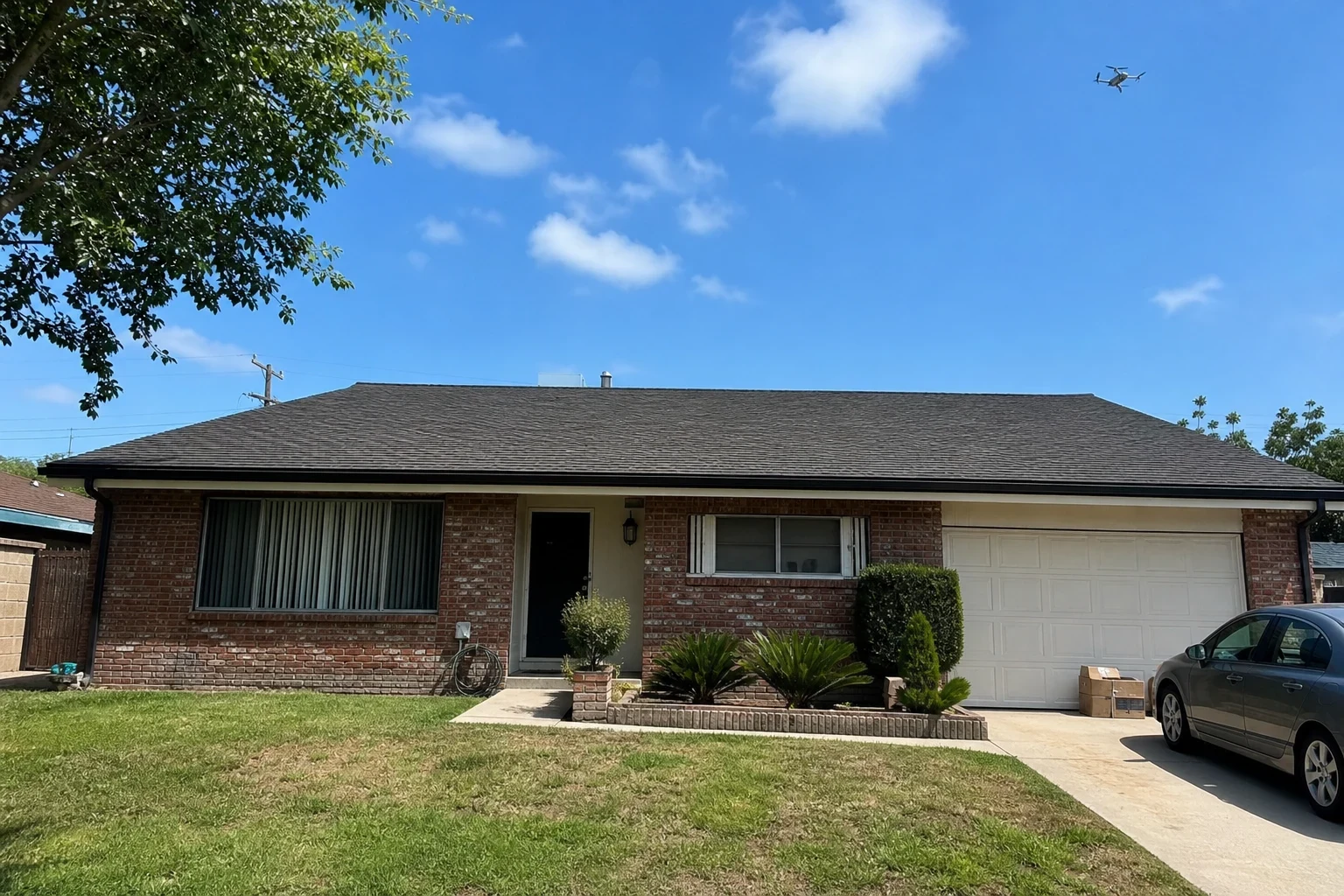
Think Hail Got Your Roof?
We'll come look, mark what was hit and give you photos and a free written estimate. Your yard stays covered, and you'll know what we're doing each step of the way.