ServicesRoof Replacement
Roof Replacement in Hawaiian Gardens
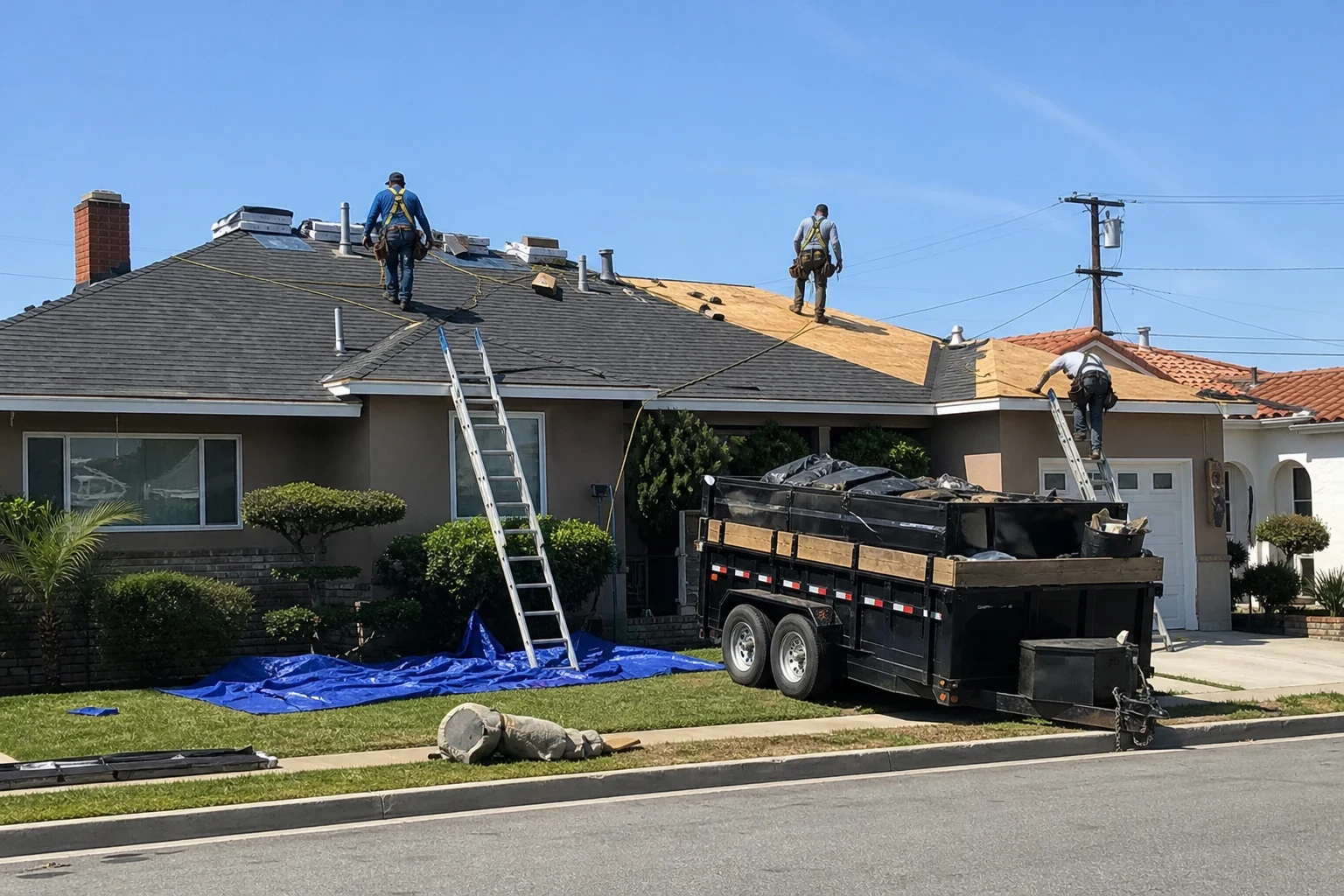
If your roof is worn out from edge to edge, we strip all of it, repair the wood below and build a new one. Plants get covered, the driveway gets boards, and you hear from us each day, so your home still feels like yours during the job.
When a New Roof Is the Right Call
Not every old roof needs replacing. If the problem is one bad valley or a few loose shingles, a roof repair costs far less and we'll say so. Replacement makes sense when the shingles are worn out across the whole roof, leaks keep showing up in new spots, or the deck underneath has gone soft.
A lot of houses around here were built in the 1950s and 60s and have had a layer or two added since. Long, dry summers bake asphalt shingles until they curl and shed granules, and the winter rains find every weak spot. When that happens all over the roof, patching just buys a few months.
A replacement is also the biggest job most people ever have done on the outside of their home. That's why we plan the protection and the communication as carefully as the roof itself.
What You Get With a New Roof
- Every old layer comes off
- We strip the roof all the way to bare wood, including any older layers hiding under the top one. That way we can check the sheathing and repair it before new materials go down.
- Deck repair
- Soft, cracked or delaminated sheathing gets cut out and replaced. We show you photos of any bad boards before we swap them.
- New underlayment and flashing
- Fresh underlayment goes down over the whole deck. We replace flashing at walls, chimneys, vents and valleys instead of reusing old metal that's rusted or bent.
- Your choice of roofing
- We install asphalt shingle roofing and tile roofing, and we can walk you through how each one handles heat, weight and cost on your house.
- Vents and ridge
- We check attic airflow and set up intake and ridge venting so heat can escape. A hot attic shortens the life of any roof.
- Protection and cleanup
- Tarps over plants and flower beds, plywood over the driveway where the dumpster sits, and a magnet sweep for nails every evening.
Signs Your Roof Needs Replacing
Curling or bald shingles
Edges lifting or cupping, or patches where the granules are gone, mean the shingles are spent. You'll often find granules piled in the gutters.
Leaks in more than one place
One leak is a repair. Stains showing up in different rooms year after year usually point to a roof that's failing all over.
A soft or sagging roof line
Dips between rafters or a spongy feel underfoot mean the deck is rotting. That needs to come off.
Two or more layers already
Another layer on top adds weight and hides the deck. At that point a full tear-off is the honest answer.
Repairs adding up
If you've paid for several fixes in a few years, the money is better spent on a new roof. We'll lay out both numbers so you can compare.
How a Replacement Day Goes
- 1
Free inspection and written estimate
We get on the roof, check the attic and take photos. You get a written estimate that lists tear-off, deck repair, materials, flashing and cleanup line by line.
- 2
Permit and scheduling
We pull the permit with the city and set a start date. Before we arrive, we tell you where the dumpster goes, when the noise starts and what to move off the walls inside.
- 3
Protect, then tear off
Tarps and boards go down first. Then we strip the old roof one section at a time and cover any open area so your home isn't left exposed overnight.
- 4
Build the new roof
Deck repairs, underlayment, flashing, vents, then the roofing itself. At the end of each day we tell you what got done and what's next.
- 5
Final inspection and walk-through
The city inspector signs off, we sweep the yard with magnets one last time and walk the job with you.
What Decides the Price of a Roof Replacement
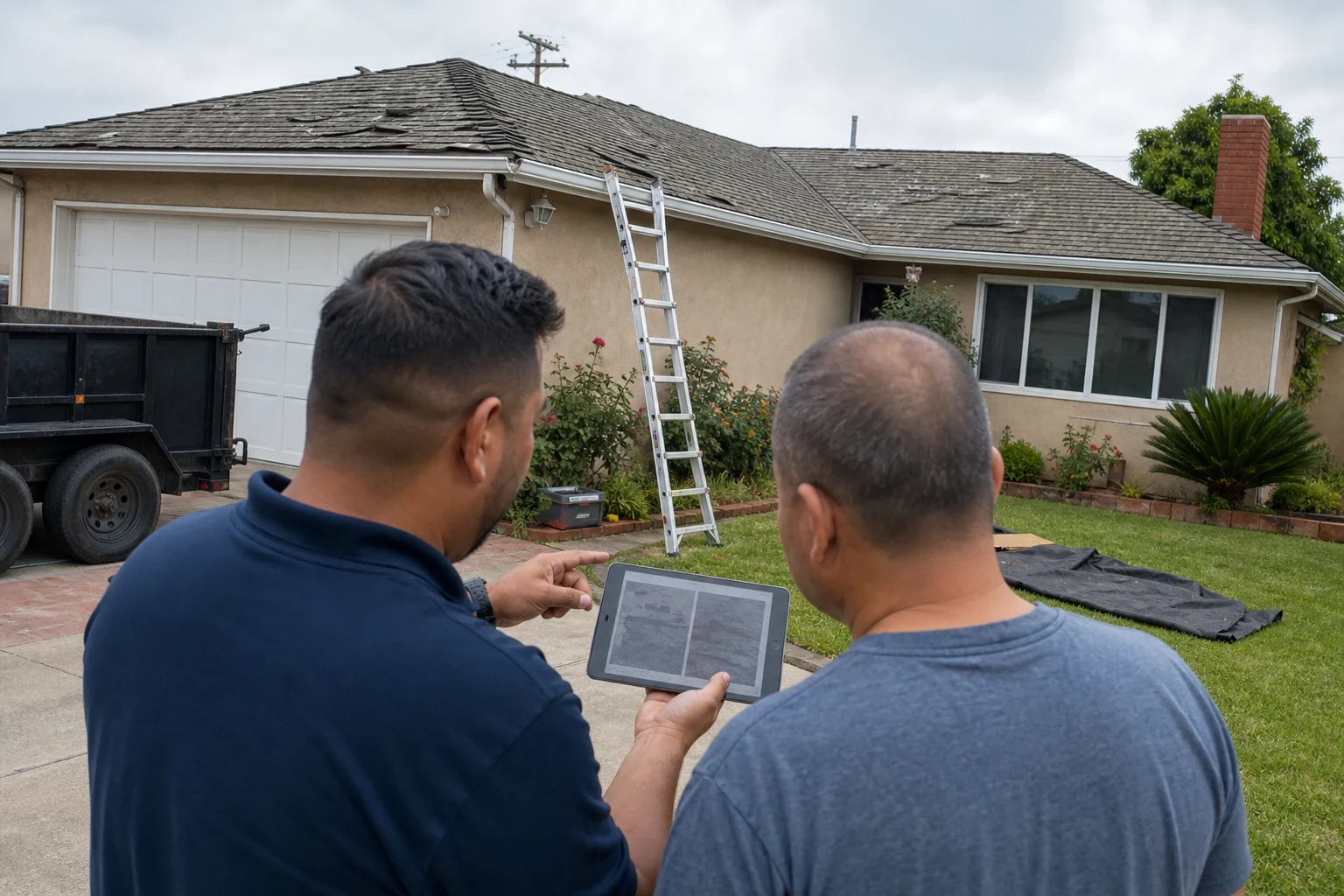
Every roof gets its own number. We measure it, check the attic and then write a free estimate that we go over with you item by item. If tear-off reveals rotted decking, you see photos and the extra cost before work goes further.
- Roof area and slope
- A bigger roof takes more material and labor. Steep slopes take more time and call for added safety equipment.
- Shingle or tile
- Asphalt shingles and tile vary widely in price, weight and installation time. With tile, the framing may need checking too.
- Old layers and decking
- Every extra old layer adds removal and disposal. Rotted sheathing is replaced one sheet at a time.
- Flashing, venting and roof features
- Chimneys, skylights, valleys and wall joints take extra labor. Better attic venting adds parts.
- Permit and hauling
- Each replacement includes the city permit fee and dumpster hauling, and both are listed on the estimate so you know about them up front.
Common Questions About a New Roof
Something not covered here? (562) 545-3161
Does someone need to be home during the work?
No, though we like a quick talk at the start and end of each day. If you're out, we call with a brief update. Please make sure we can get to the outdoor outlets and the side yard.
How many days will the replacement take?
A shingle roof on a typical house takes a few days once work begins. Tile, extra layers or a lot of deck repair stretch that out. Your estimate includes a realistic schedule, and we call if weather moves anything.
What happens to my plants and yard?
Beds and shrubs get tarped, boards go under the dumpster and ladders, and each evening a magnet goes over the lawn and driveway. If something gets bumped, we let you know.
Will insurance pay for my new roof?
It can, when a covered event like wind caused the damage. We work directly with your insurance claim, photograph the damage and meet the adjuster, but coverage is the adjuster's decision.
Can I finance a new roof?
Yes. Financing is available through Service Finance Company, subject to credit approval. We'll explain it when we give you the estimate.
Plan Your New Roof With Us
We'll check the roof and attic and leave you a written estimate with photos. The decision is yours, and we won't pressure you.